Friday, January 4, 2013

The Pakistani schoolgirl Malala Yousafzai, who was shot by the Taliban for campaigning for education for girls, was discharged yesterday from the Queen Elizabeth hospital in Birmingham, England after success in the first stage of her medical treatment.

In October, Yousafzai was shot by Taliban forces on a school bus in Mingora, Swat District, Pakistan. She was given emergency treatment in Pakistan and then flown to Britain for treatment at a specialist unit which deals with injured soldiers.

Dave Rosser, University Hospitals Birmingham NHS Foundation Trust medical director, gave a statement about Yousafzai’s release from hospital: “Malala is a strong young woman and has worked hard with the people caring for her to make excellent progress in her recovery. Following discussions with Malala and her medical team, we decided that she would benefit from being at home with her parents and two brothers. She will return to the hospital as an outpatient and our therapies team will continue to work with her at home to supervise her onward care.”

She is due to return to hospital in a few weeks for cranial reconstructive surgery.

Retrieved from “https://en.wikinews.org/w/index.php?title=Pakistani_schoolgirl_Malala_Yousafzai_discharged_from_hospital&oldid=4627170”

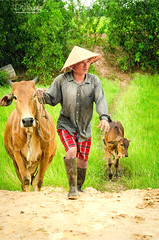
Today maintaining hygienic becomes one of the major steps in the production of milk, now the question is what is milk hygiene? How is it done and why it is important? Milk hygiene is the technique of taking necessary precautions during milk production usually the contamination arises at the time of milking; various causes of milk contamination are like dirty milk equipment, udder infection, hands and udder clothes, unclean milk tanks used for milk storage and ancillary equipment. Hygiene in milk production is also linked with the production of milk from healthy animals.

While browsing old records, history and some important research on food and health, we have found that mostly virus occurs via animals. So it’s important to take necessary measures for the maintenance of animals and their surroundings on the dairy farm.

The other aspect of getting good quality milk from animals also depends on their food and diet. Dairy animals often eat as much as 50-100 pounds of food per day, which consists of a balanced combination of forage, grain, mineral supplements and protein-rich feeds such as soybean meal.

To maintain a good a quality milk production one has to make sure that their dairy animals are fit and fine and are free from any kind of disease. A sick animal can affect dairy production in many ways like low milk yield, compromised milk quality, and reduced feed conversion. Sick dairy animals may also lead to the risk of contamination to humans (e.g., tuberculosis, brucellosis).

Many small scale dairy industries suffer from bad milk hygiene. These are due to lack of knowledge, bad management, and control, lack of availability of animal health services. Even a loss of single bovine can put a large impact on the production of the small scale dairy industry.

Now we came across the benefits of hygienic milk production and familiar to different Indian brands that are producing quality milk for the good health of their consumer and complete city.

Maintaining the hygiene of dairy farming is essentials for our routine because the wide population of the world consumes milk.

Poor cleaning techniques and milking vessels are some of the common reasons responsible for the formation of dangerous bacteria, diseases, and pathogens.

If proper cleaning measures are not taken place by the milk production company then people of our country (Youngsters, Old ones and children) will suffer from malnutrition and poor TCT () levels.

In India, various milk brands are available producing top quality milk while maintaining hygiene. All these brands are struggling and responsible for the production ofthe best quality dairy products in Delhi NCR like ghee, paneer, and curd. With the increase in automated processing plants, it’s become easier to monitor the delivery of milk from farmers to tankers, tankers to milk processing plants and then to packets and bottles. Our milk factories are taking assistance of the latest technologies for the production of milk with reduced time and effort.

There are so many online portals available on the web for milk and other dairy products delivery that are providing quality milk to their customers. Doodhvale is also a leading brand of milk, deliver pure milk at your doorstep on the same day of milking at a reasonable cost. You canbuy the best quality farm-fresh milk in Delhi NCR and other dairy products like pure Desi ghee, fresh Paneer, and Taza Matki Dahi which is good for the overall health of your family. Just browse, explore and choose the best suitable brand for your family in your budget.

Wednesday, August 30, 2006

Raed Jarrar, an Iraqi peace activist who lives in the United States, was forced to change his T-Shirt, which bore an Arabic slogan, because it was found “offensive”.

The incident took place in JFK airport in New York. The activist Jarrar reported in his blog RaedInTheMiddle that he had checked-in his bags and was issued a boarding pass. After waiting near the gate to board his jetBlue airlines flight, and after having to gone through a secondary search, two officials approached him.

“People are feeling offended because of your t-shirt,” Raed reported that one of the men said to him. The writings on the T-Shirt said in both Arabic and English: “We will not be silent”.

Raed asked why this has offended anyone, and insisted his right to freedom of expression was violated.

According to Jarrar, one of the inspectors said, “You can’t wear a T-shirt with Arabic script and come to an airport. It is like wearing a t-shirt that reads ‘I am a robber’ and going to a bank”. The airport official, unable to read Arabic, was unyielding to protests by Jarrar that the English language version of the Arabic was accurate, and suggested he wear the shirt inside out.

“Many people called and complained about your t-shirt. Jetblue customers were calling before you reached the checkpoint, and customers called when you were waiting here in the boarding area”, Jarrar was told after he complained.

One employee from JetBlue offered to buy Jarrar a T-shirt to replace the one he was wearing, since the activist had none other after his bags were checked. Refusing at first, he agreed to wear one with “New York” written on it.

The officer on the scene commented that it need not have gone from one extreme to the other: wearing a T-Shirt with an Arabic peace slogan on it, to wearing one with ‘New York’. There is no reason to hate New York if you are an Arab speaking peace activist, according to Jarrar.

“I feel very sad that my personal freedom was taken away like this. I grew up under authoritarian governments in the Middle East, and one of the reasons I chose to move to the U.S. was that I don’t want an officer to make me change my t-shirt. I will pursue this incident today through a constitutional rights organization, and I am sure we will meet soon,” Raed said.

He was issued another boarding pass, with a different seat at the back of the plane.

JetBlue said it was investigating the incident but a spokeswoman said: “We’re not clear exactly what happened.” The spokeswoman also said the airline does not forbid Arabic T-shirts, but that it does take into account the concerns of its passengers.

The American-Arab Anti-discrimination Committee said the US Transportation Department and the Transportation Security Administration were also investigating the incident after the committee lodged complaints on behalf of Jarrar.

“We Will Not Be Silent” is a slogan adopted by opponents of the war in Iraq and other conflicts in the Middle East.

It is said to derive from the White Rose dissident group which opposed Nazi rule in Germany.

Retrieved from “https://en.wikinews.org/w/index.php?title=Iraqi_activist_forced_to_change_t-shirt_with_Arabic_peace_slogan&oldid=4577322”

Wednesday, April 21, 2010

Juan Antonio Samaranch, former head of the International Olympic Committee (IOC), has died in Barcelona at the age of 89.

A former diplomat and Spanish ambassador in Moscow elected to the IOC in 1980, Samaranch was largely credited with the renewal of the Olympic movement over two decades marked by boycotts, bribery and drug scandals. While appearing to be small in stature and uncomfortable speaking in public, he was viewed as an often ruthless operator who could forge consensus within an often fractious Olympic movement and bring IOC members to deliver what he wanted.

Samaranch was admitted to hospital on Sunday with heart trouble and died at approximately 11:25 UTC, marking one of a number of occasions he has fallen ill. Even in retirement, with advancing age and medical issues, Samaranch continued to travel and be active in Olympic circles, working to try and secure both the 2012 Olympics and 2016 Olympics for Madrid as well as attending various sport conferences.

“I cannot find the words to express the distress of the Olympic Family,” current IOC president Jacques Rogge was quoted as saying, also making mention of the personal inspiration he drew from Samaranch.

During his time in office, Samaranch worked to help increase the number of participating countries at the Olympics, oversaw the creation of the Court of Arbitration for Sport (CAS) and the creation of the IOC Athletes Commission.

Prior to his election to the role of IOC president in 1980, he had a long background in sports, having held roles with the Spanish Skating Federation, Spanish National Olympic Committee and as Chef de Mission at the games in Cortina d’Ampezzo, Rome and Tokyo.

Retrieved from “https://en.wikinews.org/w/index.php?title=Former_IOC_President_Samaranch_dies_at_89&oldid=4630347”

Thursday, May 6, 2010

The Greek parliament has approved an austerity bill proposed by the government to help rescue the country’s ailing economy.

The proposal, which includes increases in taxes, as well as salary and pension cuts, passed with 172 members of parliament supporting, 121 opposing, and several abstaining; the proposal needed at least 151 votes to pass. There are 300 total parliament seats.

The vote comes after a debate that took the entire day. Meanwhile, rallies and strikes are being held around the country to protest against the measures; the protests have occasionally turned violent, with a firebomb attack on a bank killing three people yesterday.

The Eurozone and the International Monetary Fund had asked for austerity plans to be implemented so that Greece can access a rescue loan package worth US$146 billion in order not to default on debts. The austerity programme is estimated to save $38 billion. Greece also aims to lower the public deficit to less than 3% of the GDP in four years; at the moment it is at 13.6%.

Prime minister George Papandreou described the situation to parliament ahead of the vote, saying: “The situation today is simple – either we vote and implement the deal or we condemn the country to bankruptcy […] The future of Greece is at stake. The economy, democracy and social cohesion are being put to the test.”

Papandreou also expelled three Social deputies from his parliamentary team when they abstained from voting; however, his bloc still has a parliament majority of 157 MPs.

Finance minister George Papaconstantinou also commented that Greece will default on some of its $12 billion debt on May 19 if action is not taken, saying: “The state’s coffers don’t have that money. And because the only way for the country to avoid bankruptcy and suspension of payments is to take the money from our European partners and the International Monetary Fund.”

Opposition parties, however, say the measures will put too heavy a burden on the populace; the leader of the conservatives, Antonis Samaras, commented: “The dose of the medicine you are administering is in danger of killing the patient. You know that these measures have sparked a social explosion […] The citizens of this country have to believe there is a way out. Because whoever cuts pensions of €700 cannot convince anyone.”

Retrieved from “https://en.wikinews.org/w/index.php?title=Greek_parliament_passes_austerity_bill&oldid=4630085”

Submitted by: Jason Morton

This close to Christmas, I hear the same thing from alot of people. “Things are tight right now”, I shutter everytime I hear those words. I think about their families, spouses, & children. I wonder what will their Christmas be like?

I’ve been there. Like it was yesterday, I remember a X-mas a few years ago where my wife & I were struggling. With 3 little ones anticipating the holiday, we had a total of $200 to spend.

Now you and I both know that Christmas is not supposed to be about the presents, but try selling that story to a 2,4,&7 year old. It doesn’t go over so well.

My wife, bless her heart did as good as she possibly could with the money she had available. However when X-mas rolled around and the kids starting opening gifts, it was over in a few minutes. Although the kids never said anything, you could see a little disappointment in their faces.

I believe any good parent wants their children to have as much as possible. Maybe not spoil them rotten, but let them have that one memory once a year where they were spoiled on that one day.

That day was breaking point. I had enough, we were working our backsides off and for what? $200 for x-mas? That wasn’t going to cut it.

[youtube]http://www.youtube.com/watch?v=xbWldANGq68[/youtube]

Maybe Im all alone here, has anyone else gone through this?

I started searching for anything that would bring in an income or extra money.

Have you ever stayed up late at night and watched those infomercials and wondered, “who would ever buy this junk?”. Well, that’s me. I bought into all kinds of crap. It always seemed that every program I became involved in always had something missing. Like they were not telling me everything, or just leading me to an even bigger purchase.

One program intially cost me $80. I received the information, then the calls started coming in. Offering all these other services that would “garuantee” the success of my new little business. I deciced to take a plunge and buy everything that they had to offer. Doing this was supposed to put my program on auto-pilot, and all I had to do was collect a check.

6 months and $4000- four thousand dollars later, I had not made ONE cent! I poured everything I had and didn’t have into this thing and it practically crushed me. Needless to say I just about jumped onto the “everything is a scam” train.

Who would of blamed me?

I didn’t understand then, that there were simple little ways to earn money online. All I had to do was find the right people to talk to. I’m glad that I didn’t give up then, or I never would have made it to where I am now.

Christmas is different now. We asked our kids to make up lists, and it is so exciting that the only diffulculty is simply going out to pick up the gifts. I’m proud that the only concern my wife and I have is how are going to get it all to fit in the area the tree is in. I think part of our Christmas will be celebrated in the garage.

I truly do not say these things to offend you or to try to impress you.

I simply want you to have these same or similar experiences.

You may not think so, but I would love to be in your position now. I had to spend countless hours and money, finding ways to earn online. Now, it’s not uncommon for people to start earning money there first day.

Do you think you could become successful if you could watch videos showing you exactly what to do and how to do it?

How about if you had access to a live support desk? I mean real people.

Only you can decide if you are ready.

About the Author: Jason Morton is a top producer in the world of profiting online. His views, advice, and support have lead to the success of many others. If you too would like to take that next step and begin earning an income please visit,

elitewealthcrew.com

Source:

isnare.com

Permanent Link:

isnare.com/?aid=456849&ca=World+Affairs

Saturday, February 3, 2018

On Wednesday, English football club Chelsea FC announced signing French forward Olivier Giroud from cross-town rivals Arsenal FC on a eighteen-month contract. The deal is reportedly worth about £18 million. Olivier Giroud is to wear jersey number 18, the club announced via their website.

31-year-old Giroud joined The Gunners in 2012. Since then, the Frenchman has played 253 games for Arsenal and scored 105 goals. During his tenure at the Emirates Stadium, Giroud has won three FA Cups. He has also won the Community Shield trophy with Arsenal.

Giroud remarked on joining The Blues, “Chelsea is one of the biggest teams in the Premier League. They have won maybe the most trophies in the last six or seven years. It’s a massive club and I am proud to sign for Chelsea, and I’m looking forward to playing.”

Chelsea loaned Belgian forward Michy Batshuayi to German club Borussia Dortmund. Giroud’s departure from Arsenal was announced shortly after Arsenal announced signing Gabonese striker Pierre-Emerick Aubameyang from Dortmund for about £56 million making him the costliest player in Arsenal’s history.

Retrieved from “https://en.wikinews.org/w/index.php?title=Football:_Giroud_leaves_Arsenal_to_sign_eighteen-month_deal_with_cross-town_rivals_Chelsea&oldid=4576665”

Wednesday, March 1, 2006

A suspected case of BSE, better known as mad cow disease, has been discovered in Sweden at a farm near Västerås some 80 kilometres west of Stockholm.

The affected farm has been quarantined and no ruminants from the farm are allowed to be sold or transported. The cow was destroyed earlier after symptoms of calving paralysis had been discovered, and the tests where carried out in accordance to rules set by the European Union (EU).

The Swedish Board of Agriculture (Jordbruksverket) analysed a specimen from the cow at the farm this weekend. The tests confirmed the presence of BSE and the specimen was sent for further analysis at a United Kingdom laboratory.

If the British analysis confirms BSE in the specimen, it will be the first case of BSE in Sweden. The affected farmer told the Swedish public service radio: “As my father said, if we have to make history it would be a pity to do it this way.”

BSE isn’t transmitted directly between animals, but rather from feedstuffs containing tainted tissues from infected ruminants to healthy animals. Such cattle feeds have been prohibited in Sweden for many years, but as the affected cow was born in 1994 she might have been given such food in her early life.

The disease has been declining in the EU after restrictions and regulations were put in place or tightened following an epidemic of the disease in humans in the UK. In that outbreak 150 people died.

Sweden has been considered a low-risk country. Ten previous tests have all proven to be false alarms.

Retrieved from “https://en.wikinews.org/w/index.php?title=Possible_first_case_of_mad_cow_disease_in_Sweden&oldid=1986565”

Sunday, December 11, 2005

A series of large explosions have occurred close to Hemel Hempstead Hertfordshire, UK. The source of the explosions has been confirmed as the Hertfordshire Oil Storage Terminal (HOSL), Hemel Hempstead, known locally as the Buncefield complex. Up to 150 fire fighters are reported to be at the scene with 10 fire appliances and 1 specialist foamer.

The first ‘blast’ was heard near Hemel Hempstead on Sunday 11 Dec at 6 am. Further smaller explosions followed at 6:24am , 6:26am, 6:30am. BBC News 24 reported an additional, fourth large explosion. Hertfordshire Police Constabulary are currently treating the explosion as an accident.

Reports say the explosion, which registered 2.4 on the Richter scale, was heard as far away as Oxford, and Whitehall, Central London which is 60km (38 miles) away. Eyewitness statements report that the explosion was heard from at least 160km (100 miles) away and as far away as France and The Netherlands. Pilots reported noticing the blast from the North Sea and the West Country area of the UK. The M1 motorway which runs close by has been closed in both directions near the blast which is causing travel chaos as other roads become congested.

Malcom Stewart, a BBC News24 eyewitness who is a tanker driver for the site has reported that the site supplies several oil companies and is a joint operation between Total UK and Texaco, it is also used by BP, Shell and the British Pipeline association. The complex is not a refinery but a storage facility for refined petroleum awaiting distribution to airports and filling stations. The eyewitness reports that the depot has approximately 20 tanks which can hold about 3 million gallons (11 million litres or 70,000 barrels) each. Another News24 eyewitness has just reported that he has seen at least 5 of these tanks on fire.

The depot operates on a 24 hour basis and is split into 2 parts – aviation fuel and domestic fuel. A number of eyewitnesses have reported on UK news that the aviation fuel side appears to be the part of the site that has been affected.

Local authorities were not immediately available for comment but there have been reports of casualties.

Some reports on live television state that, “Several other neighbours said they did see a plane go into the depot.” BBC News 24 were also discussing the idea a possible plane crash as the cause of the explosions. Hertfordshire police have now gone on the record to say that there is no plane involved (BBC News24).

The police have issued a contact number 0800 096 0095 and asked that people do not call the emergency services in Hertfordshire directly unless it is an emergency.

In addition to being an oil storage depot, it is a major hub on the UK oil pipeline network with pipelines to Killingholme Lindsey Oil Refinery (LOR), Humberside (10 inch), Merseyside (10 and 12 inch), Coryton on the Thames Estuary (14 inch) and Heathrow (6 and 8 inch) and Gatwick airports radiating from it.

The disaster is believed to be the worst explosion at a petrochemical plant in the UK since the Flixborough disaster of 1974.Hertfordshire’s Chief Fire Officer Roy Wilsher said: “This is possibly the largest incident of its kind in peacetime Europe.”

A firefighting press officer said that they are stock piling foam from neighboring regions for a prolonged attach which they hope will stop the spread of the fire, however, the inferno itself will have to burn out which could take between 24 hours and a few days.

Despite the authorities saying that there is no need to panic buy petrol, filling stations have had above average queues since this morning and some small garages have ran out.

Deputy Prime Minister John Prescott has visited the scene.

Retrieved from “https://en.wikinews.org/w/index.php?title=Major_explosions_at_UK_oil_depot&oldid=4454020”

Submitted by: Susanne Pacher

My schedule in Ottawa this past weekend was extremely compressed, but there was one place I wasnt going to miss: the Canadian Museum of Contemporary Photography. As a person with no formal background, yet a keen interest in the visual arts and photography, I have been wanting to visit this museum for a long time. And my Internet research revealed that the Museum is featuring a very special exhibition right now: two photographic series by Sunil Gupta, an Indian-born Canadian citizen, exploring issues of identity, culture and the immigrant experience.

Let me start first with the Museum itself, a rather unique venue in Ottawa with a long history. The Canadian Museum of Contemporary Photography began its life all the way back in World War II as the Still Photography Museum of the National Film Board. Its activities include collecting, publishing and organizing traveling exhibitions and educational programs to foster the efforts and development of Canadian photographers.

Its a unique place in a unique venue: the Museum is housed in a former railroad tunnel of the Grand Trunk Railroad. It is accessible through an above-ground entrance immediately west of the Fairmont Chateau Laurier Hotel in downtown Ottawa, and an elevator takes you 2 storeys down from street level. As a former railroad tunnel, the Museum’s unique dimensions wont come as a surprise: it measures 166 meters (545 feet) in length by only 17 meters (56 feet) in width. The facility is more like a 32-storey high-rise building laid on its side.

Even constructing the Museum entailed significant engineering challenges: due to the narrowness of the site, squeezed in between the Chateau Laurier on one side and the Rideau Canal on the other, construction trucks had to back into the site, edging their way half a mile along a road carved in the limestone and shale cliff face.

But I wasnt only there to explore the unique architectural features of the gallery. The main reason for my visit was an exhibition by Sunil Gupta, whose 2 collections shed light on the immigrant experience.

[youtube]http://www.youtube.com/watch?v=pDY6bWT5oTM[/youtube]

Sunil Gupta was born in New Delhi in 1953 and came to Montreal with his parents at age 15. Over the years he has also lived in New York City and London and just recently moved back to India. Originally he studied accounting, but later moved into visual arts and photography.

Until April 23, 2006, the Museum features two highly personal collections by this artist. Social Security (1988) features Sunil Guptas family photographs and his mothers words to shed light on the story of one immigrant family in Montreal. His family came from a middle-class background in India, and after their move to Canada they had significant adjustment problems. Sunils father was forced to work as a security guard and the family experienced a loss of financial security and social status. This was complicated by the fact that his parents were already in their fifties by the time of the move which made integration into Canadian culture even more difficult.

This photo collection illustrates the fact that his parents had traditional desires for both Sunil and his sister, and neither of the two children fulfilled the role expectations put upon them by their Indian parents. Sunils sister ended up marrying an American, something the parents did not support. Sunil himself is actually gay and had several long-term relationships with men, much to the chagrin of his parents. Neither offspring fulfilled the role of marrying an Indian spouse and creating a traditional Indian family. As such, the move to Canada was a big disappointment, particularly for Sunils father.

Incidentally Sunils father died of a heart attack on a Montreal street in 1986. He wasnt found until several days later. One particularly gripping photograph shows Sunils fathers belongings, money, identification, credit cards, that were removed from his body after his death. It took the authorities three days to notify the family, presumably because his father was assigned to the immigrant section of the morgue. Nobody had bothered to check his identification and call his family, even though his father had all the necessary papers on him. And his social security card had been neatly cut in half.

Sunil Guptas second photo collection Homelands (2001 to 2003) includes large-scale diptychs that juxtapose images from his experience in the West with images from his home country in India. His exhibition explores highly personal topics, such as Guptas homosexuality and the fact that he is HIV positive. Gupta was diagnosed with HIV in 1995.

For me the most powerful image of the collection includes Gupta in front of a mirror, stark naked, facing the camera, with a sliver of his mirror image showing right next to an image of India. My museum guide indicated that Sunil has actually commented that he lives right in that narrow line between East and West.

It seems that his cultural identity is tenuous at best and Sunil decided recently to move back to India to explore his own cultural background. It is significant to mention that India does not accept homosexuality, does not offer treatment required for AIDS patients and doesnt even officially acknowledge the existence of the disease. In addition India harbours a host of dangerous viruses that pose a constant threat to Sunils health. Even beyond that Sunil indicated that he lives in constant fear that his medical condition will be discovered and that he will be deported from India.

Both of Sunil Guptas series of photographs are highly personal, where he exposes himself (literally), his family members and the dynamics of an immigrant family in North America. His images use colour, atmospheric influences and juxtaposition to express symbolism and speak of an ongoing struggle to find his own personal, sexual and cultural identity at the confluence of Eastern and Western cultures.

For me personally, Sunil Guptas autobiographical photographs were almost shocking in their candor and openness. They talk about the cultural pressures and expectations that face second generation immigrants growing up in a liberal Western environment. Juxtaposed to this external environment is their traditional Eastern family milieu with its strict rules and role expectations, almost imposing a schizophrenic existence on their offspring.

It was rather surprising to me that Sunil Gupta decided recently to move back to a country where, as a gay HIV-positive individual, he is not accepted and it speaks to his overwhelming urge to reconnect with his roots.

The Canadian Museum of Photography is currently also hosting another installation: Imprints: Photographs by Michel Campeau, Marlene Creates, Lorraine Gilbert, Sarah Anne Johnson, and Sylvie Readmen features 19 recent acquisitions that explore nature and its forces as they intersect with the human world.

For the entire article including photos please visit http://www.travelandtransitions.com/stories_photos/ottawa_museum_photography.htm

About the Author: Susanne Pacher is the publisher of Travel and Transitions (

travelandtransitions.com

), a popular web portal for unconventional travel & cross-cultural connections. Check out our brand new section featuring FREE ebooks about travel.

Source:

isnare.com

Permanent Link:

isnare.com/?aid=117489&ca=Travel}